
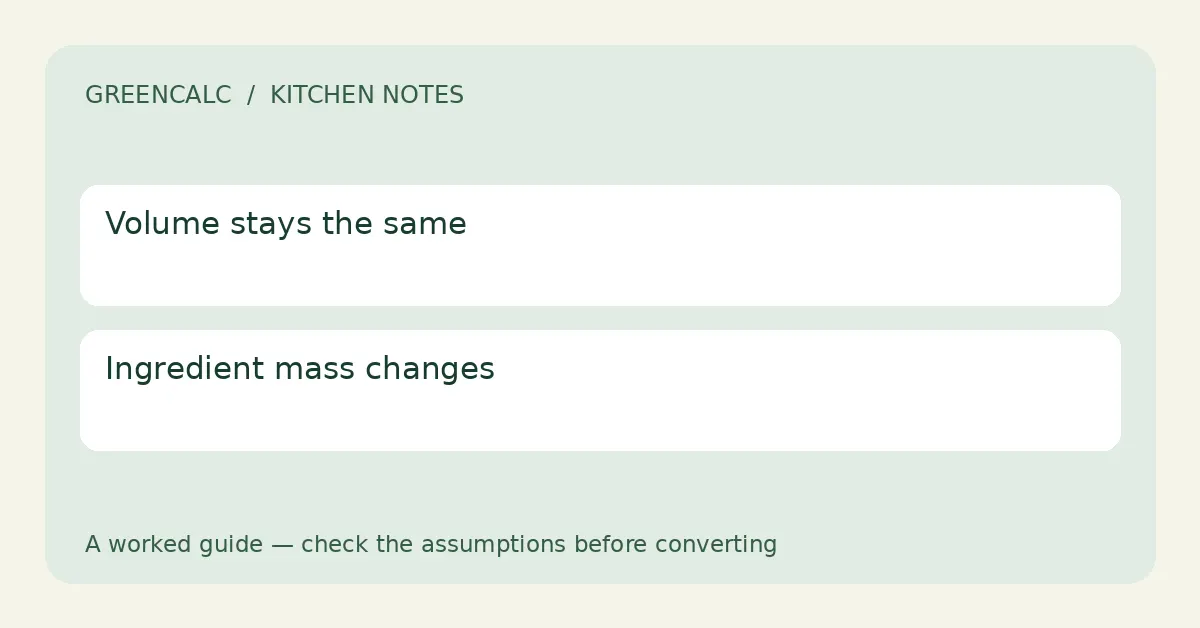
Original visual accompanying the guide: Why a Cup of Flour and a Cup of Sugar Weigh Differently
A cup is a container, not a fixed mass
Cup-to-pound conversion requires a weight per cup for the ingredient. Air spaces between particles and the way an ingredient settles affect the result. A cup of flour cannot be assigned the weight of a cup of sugar merely because both use the same measuring cup. Choose an ingredient-specific value that matches your recipe and measuring method.
Use the weight stated by your source
If your flour reference uses 120 grams per cup, two cups correspond to 240 grams, or about 0.5291 pounds. Enter 120 as grams per cup in the tool. Another recipe may specify a different flour weight because of its measuring convention. Prefer the recipe's own gram quantity when it provides one, rather than replacing it with a general chart.
Check the calculation with a scale
Set an empty container on the scale and tare it. Add the ingredient using the intended method, then read grams or pounds. Repeat if you need a reliable value for future use. A measured grams-per-cup value applies to that ingredient and method; packing brown sugar or scooping flour differently changes the practical result.
Work out your quantity
Use the Cups to Pounds Converter with the assumptions described above. Browse Food calculators for another kitchen conversion, or visit GreenCalc for the full calculator library.
Related guide: Find Your Ingredient's Grams per Cup with a Kitchen Scale.
More cooking conversions
- Grams to Cups Converter: Convert a Mixed Ingredient List Without Using One Cup Weight.
- ml to Grams Calculator: 100 mL of Water, Oil and Honey: Compare the Masses.
- Pounds to Cups Converter: Packed Brown Sugar in a Pound-Based Recipe: Read the Instruction.
By GreenCalc · Updated 2026-11-03