
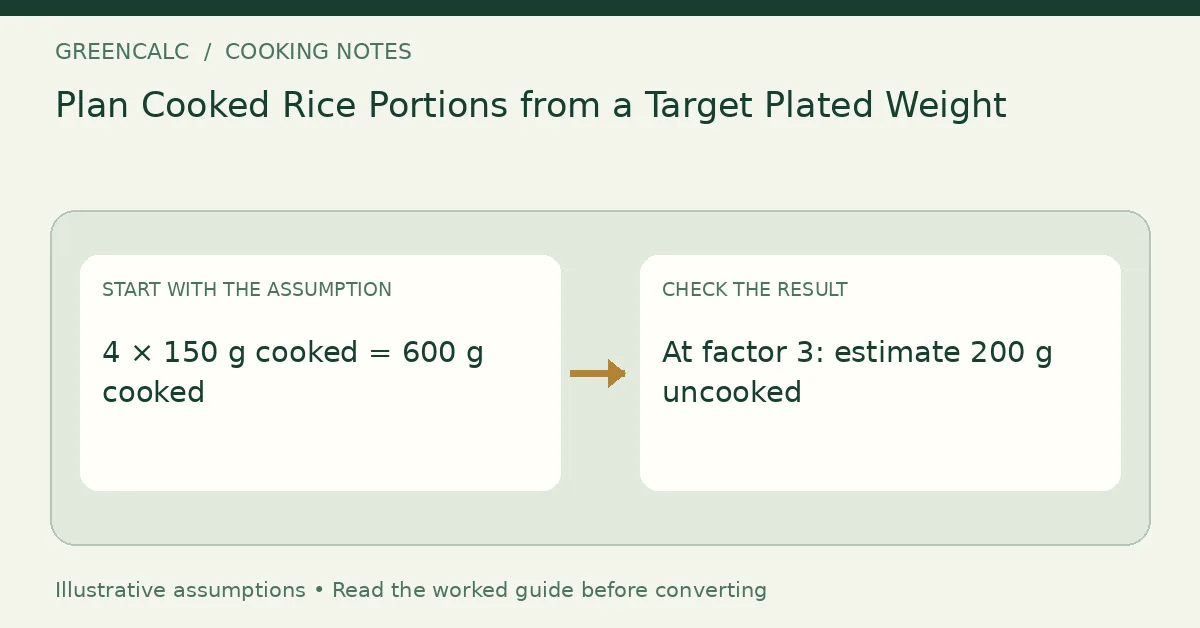
Original educational diagram for Plan Cooked Rice Portions from a Target Plated Weight. Values are illustrative and use the assumptions explained in the article.
Choose the target serving basis first
If you decide to plate 150 grams of plain cooked rice for each of four portions, the cooked target is 600 grams. This is an example planning quantity, not a dietary recommendation. The number of portions, appetite, other dishes and your own serving plan determine the target. Use the cooked weight you actually intend to serve.
Reverse the measured yield factor
At a chosen cooked-to-uncooked weight factor of three, divide 600 by three to estimate 200 grams uncooked. At a measured factor of 2.8, the estimate becomes about 214.3 grams uncooked. The difference comes from the assumed water uptake and method. Use a measured factor when consistent portion planning matters, and allow a practical margin if appropriate for your event or household.
Keep sauces and nutrition labels on their own basis
A dressed rice dish weighs more than its plain rice component if sauce, vegetables or oil are added. Do not apply the plain-rice factor to the total finished dish. When reading nutrition information, check whether it refers to uncooked rice, plain cooked rice or a prepared serving. Converted cooked mass is not a new quantity of dry rice; some of that mass is absorbed water.
Work through your own quantities with the Uncooked to Cooked Rice Calculator. Check the ingredient basis or conversion convention in the form before using its result.
Related kitchen guidance
Continue with Dry Pasta Portions and Cooked Servings: Keep the Basis Clear. Explore the Cooking converters collection in Food calculators, or browse GreenCalc for other subjects.
For a different part of this task, read Measure Rice Yield for Your Variety and Cooking Method.
By GreenCalc · Updated 2026-11-03