
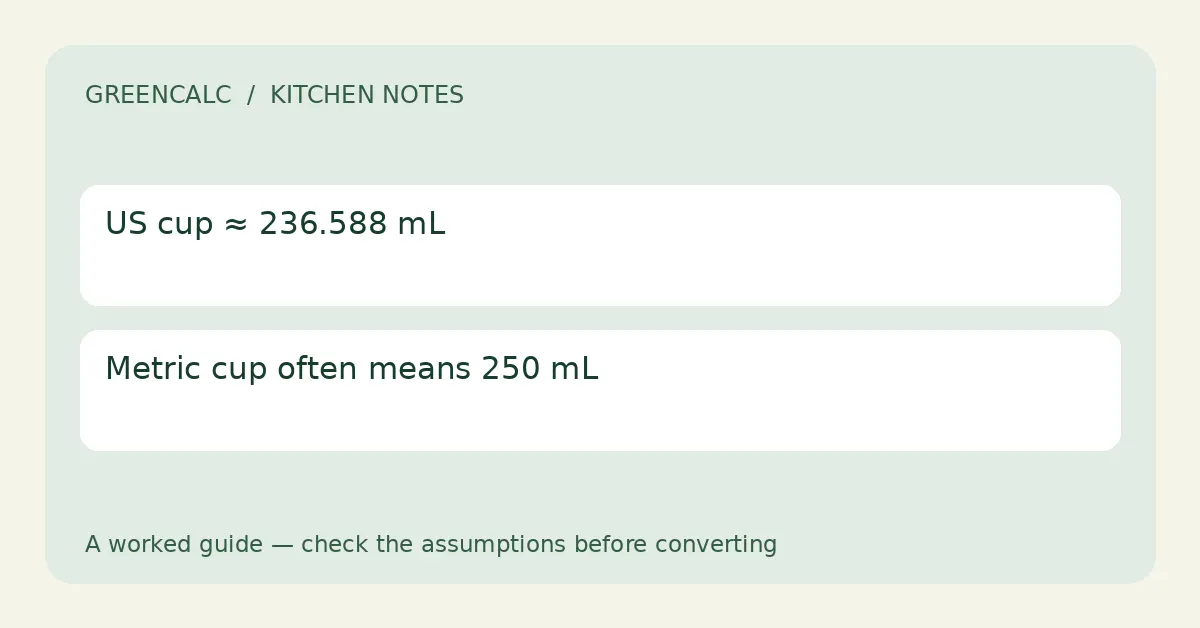
Original visual accompanying the guide: Reading Metric and US Recipes Without Mixing Units
Read the recipe's unit notes first
The word cup can refer to different conventions. Check whether the recipe identifies US customary cups, metric cups, or another standard. The GreenCalc volume tool uses US customary units, so a recipe explicitly specifying 250 milliliters per cup should be entered in milliliters instead. This preserves the recipe's stated quantity without changing the tool's assumptions.
Avoid ambiguous ounces
An ounce by weight is approximately 28.3495 grams. A US fluid ounce is approximately 29.5735 milliliters. The similar numbers make accidental substitutions easy to miss, especially for water-like liquids. Look for fl oz on a volume measure and oz on a scale. Density determines the relationship between mass and volume for each ingredient.
Make one conversion sheet for the recipe
Write down each original quantity and its converted quantity before starting. Keep ingredient names alongside the numbers, and note whether a measure is level, packed, sifted or melted. Round at the point of measurement, using equipment appropriate for the quantity. A clear preparation sheet helps prevent converting a value twice while moving between the original instructions and your bowls.
Work out your quantity
Use the Cooking Measurement Converter with the assumptions described above. Browse Food calculators for another kitchen conversion, or visit GreenCalc for the full calculator library.
Related guide: US Cups, Tablespoons and Teaspoons: A Practical Conversion Guide.
More cooking conversions
- Grams to Cups Converter: 250 g of Flour: Work Out US and Metric Cup Measures.
- ml to Grams Calculator: Use an Ingredient Label to Check Net Weight and Volume.
By GreenCalc · Updated 2026-11-03