
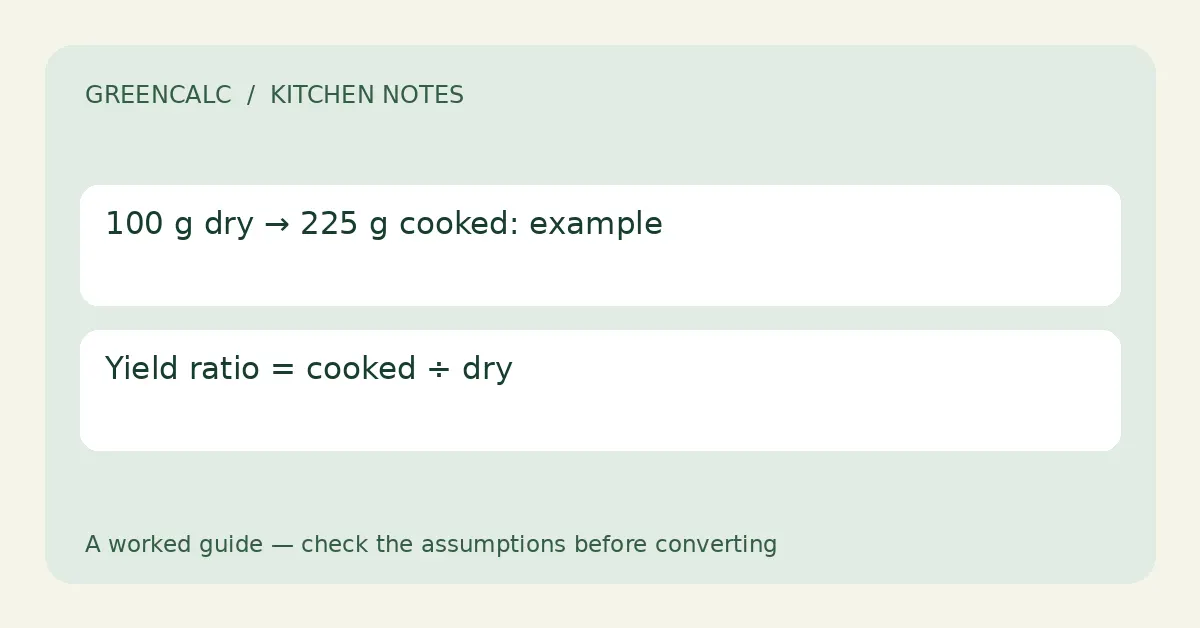
Original visual accompanying the guide: Measure Pasta Cooking Yield Instead of Assuming One Ratio
Treat a yield factor as a measured condition
Pasta absorbs water during cooking, so cooked mass is greater than dry mass. The ratio changes with shape, cooking time and draining. A factor such as 2.25 is an example starting estimate, not a universal property of pasta. The tool lets you enter a ratio that matches your own product and preparation.
Run a simple yield test
Weigh the dry pasta, cook it using your normal method, and drain it consistently. Weigh the cooked pasta before adding sauce. If 100 grams dry produces 225 grams cooked, divide 225 by 100 to obtain 2.25. Record brand, shape, cooking time and drain method with the factor so that you know when the measurement applies.
Convert in either direction
Multiply dry weight by the factor to estimate cooked weight. Divide cooked weight by the factor to estimate the original dry quantity. For 450 grams cooked at a factor of 2.25, the estimated dry amount is 200 grams. Sauce, oil and retained cooking water add mass that the plain-pasta factor does not describe, so do not apply it to a finished dressed dish.
Work out your quantity
Use the Dry to Cooked Pasta Converter with the assumptions described above. Browse Food calculators for another kitchen conversion, or visit GreenCalc for the full calculator library.
Related guide: Dry Pasta Portions and Cooked Servings: Keep the Basis Clear.
More cooking conversions
By GreenCalc · Updated 2026-11-03