
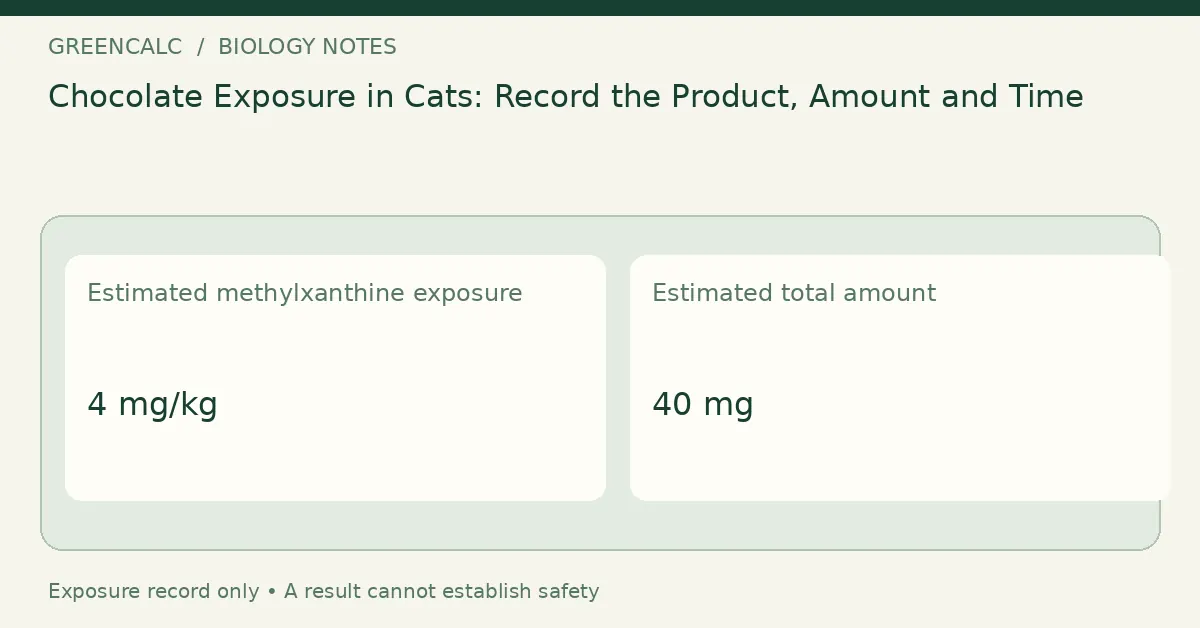
Original instructional diagram for Chocolate Exposure in Cats: Record the Product, Amount and Time. Values, when shown, are illustrative; clinical images do not recommend a dose.
Keep the exposure record species-specific
A cat’s exposure assessment needs its own product details and body weight. A familiar chocolate label or a number taken from a dog example does not establish the actual concentration or the cat’s risk. Contact a veterinarian for suspected exposure.
Use Cat Chocolate Toxicity Calculator to work through these inputs while keeping the displayed assumptions in view.
Uncertainty is a reason for advice
An unknown amount or ingredient list should not be converted into a zero exposure. The calculator cannot identify what was eaten or determine whether the cat has symptoms. Do not wait for a calculated threshold before seeking professional guidance.
This question belongs to the Cat calculators group within Biology calculators.
Read the calculation on its stated basis
Estimated exposure (mg/kg) = amount eaten (g) × combined methylxanthines (mg/g) ÷ body weight (kg).
Contact a veterinarian or animal poison service for suspected exposure. No safety classification or treatment instruction is produced.
Retain the input definitions and units with the result. A later comparison should use the same basis; a change in method is a new scenario, not simply a more precise version of the old number.
Keep related questions separate
Cat Quality of Life Calculator addresses a related part of the measurement or interpretation task. Check its own method before carrying a value from one tool to the other.
For a related perspective, read A Cat’s Quality-of-Life Log: Record Changes for a Veterinary Conversation.
For tools in other subjects, return to GreenCalc. Keep the calculator result with its assumptions rather than using a link or a matching unit as evidence that two models are interchangeable.
By GreenCalc · Updated 2026-11-05