
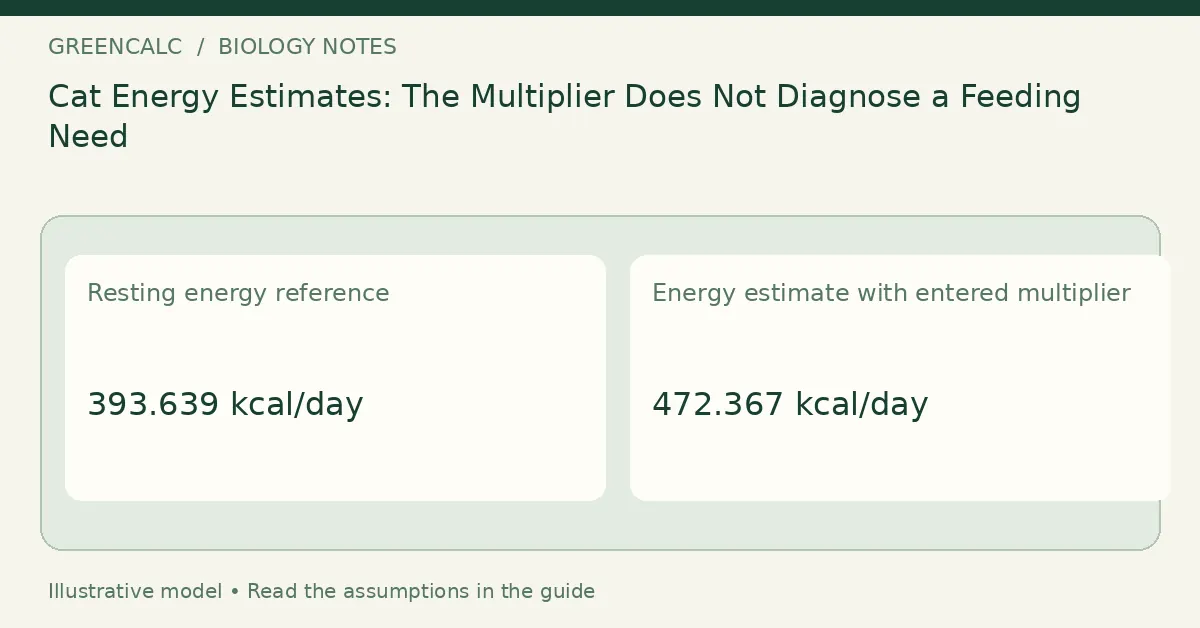
Original instructional diagram for Cat Energy Estimates: The Multiplier Does Not Diagnose a Feeding Need. Values, when shown, are illustrative; clinical images do not recommend a dose.
Do not treat a multiplier as an assessment
A numerical factor cannot identify a cat’s body condition, health status or appropriate rate of weight change. The form therefore requires a chosen multiplier rather than silently treating one value as suitable for all cats.
Use Cat Calorie Calculator to work through these inputs while keeping the displayed assumptions in view.
Translate an allowance only after it is chosen
Once a suitable daily energy allowance has been established, the actual food’s energy density determines the portion. Other foods and treats belong in the same overall plan. A calorie estimate does not evaluate nutritional completeness or replace veterinary follow-up.
This question belongs to the Cat calculators group within Biology calculators.
Read the calculation on its stated basis
Resting energy reference (kcal/day) = 70 × body weight (kg)^0.75. Multiply by the entered factor for the scenario.
No default multiplier or weight-loss target is supplied. Individual plans need veterinary assessment.
Retain the input definitions and units with the result. A later comparison should use the same basis; a change in method is a new scenario, not simply a more precise version of the old number.
Keep related questions separate
Dry Matter Calculator addresses a related part of the measurement or interpretation task. Check its own method before carrying a value from one tool to the other.
For a related perspective, read Wet and Dry Pet Food Comparisons: Put the Nutrient on the Same Moisture Basis.
For tools in other subjects, return to GreenCalc. Keep the calculator result with its assumptions rather than using a link or a matching unit as evidence that two models are interchangeable.
By GreenCalc · Updated 2026-11-05