
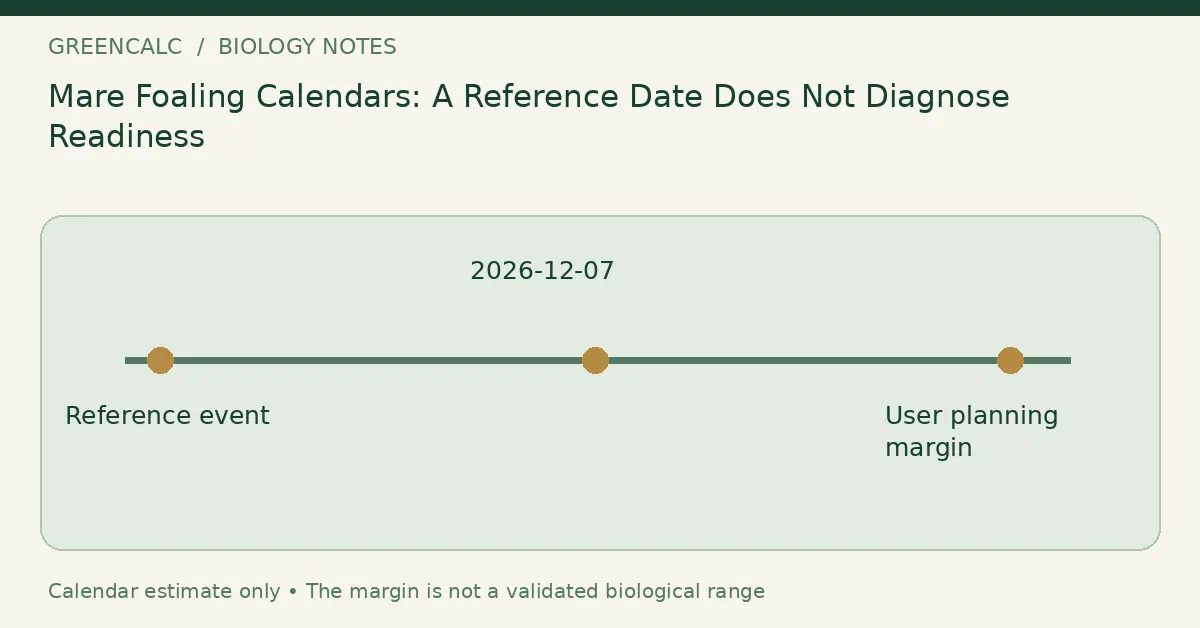
Original instructional diagram for Mare Foaling Calendars: A Reference Date Does Not Diagnose Readiness. Values, when shown, are illustrative; clinical images do not recommend a dose.
Keep the mare’s own records
A reference average can provide a planning starting point, while an individual mare’s history and current assessment may add context. Record the actual breeding reference used. Do not mix an eleven-month shorthand with a day count without recognizing that calendar months have unequal lengths.
Use Mare Gestation Calculator - Horse Gestation to work through these inputs while keeping the displayed assumptions in view.
Foaling readiness needs more information
The calculation adds days to a date; it does not evaluate physical changes or fetal development. A mare can differ from the reference estimate. Follow an appropriate veterinary monitoring plan instead of treating either end of the entered planning margin as a clinical threshold.
This question belongs to the Animal pregnancy calculators group within Biology calculators.
Read the calculation on its stated basis
Estimated date = entered breeding date + entered reference days. The planning range adds and subtracts your chosen margin.
The 340-day reference is approximate; breed, season and individual pregnancies vary.
Keep the date, reference duration and planning margin together in the record. If a different reference event or duration is used, calculate a new estimate rather than silently changing the meaning of an earlier date.
Keep related questions separate
Horse Weight Calculator addresses a related part of the measurement or interpretation task. Check its own method before carrying a value from one tool to the other.
For a related perspective, read Horse Tape Measurements: An Estimate Is Not a Scale Weight.
For tools in other subjects, return to GreenCalc. Keep the calculator result with its assumptions rather than using a link or a matching unit as evidence that two models are interchangeable.
By GreenCalc · Updated 2026-11-05