
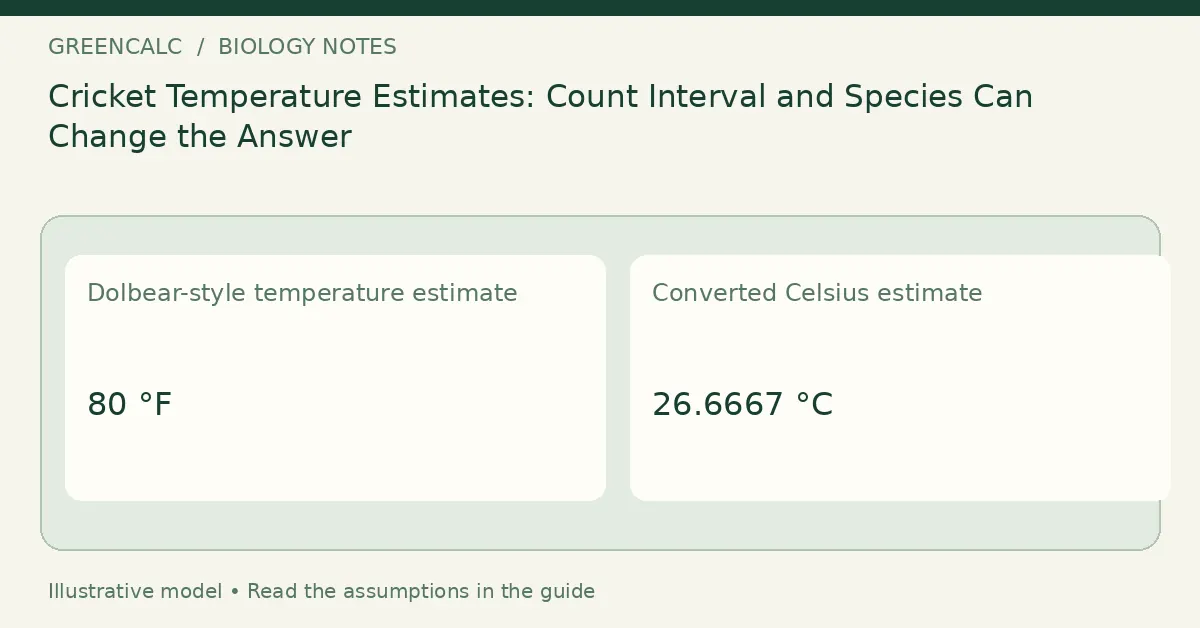
Original instructional diagram for Cricket Temperature Estimates: Count Interval and Species Can Change the Answer. Values, when shown, are illustrative; clinical images do not recommend a dose.
Count the time interval as well as the chirps
A count from fifteen seconds and the same count from one minute describe different chirp rates. Enter both the count and the observation interval. The tool first converts them to a per-minute rate before applying the empirical relationship.
Use Crickets Chirping Thermometer to work through these inputs while keeping the displayed assumptions in view.
Check species and conditions
The relationship is associated with particular tree-cricket observations, not every chirping insect. Background noise, missed chirps and unsuitable conditions can distort the estimate. Use a suitable thermometer when an accurate environmental temperature matters.
This question belongs to the Other animals calculators group within Biology calculators.
Read the calculation on its stated basis
Convert chirps to a per-minute rate; Dolbear-style °F estimate = 50 + (chirps per minute − 40)/4. Convert °F to °C using (°F − 32) × 5/9.
An empirical relationship associated with snowy tree crickets, not a calibrated general-purpose thermometer.
Retain the input definitions and units with the result. A later comparison should use the same basis; a change in method is a new scenario, not simply a more precise version of the old number.
Keep related questions separate
Bird Age Calculator addresses a related part of the measurement or interpretation task. Check its own method before carrying a value from one tool to the other.
For a related perspective, read Bird Lifespan Comparisons: Choose the Species Before Comparing Ages.
For tools in other subjects, return to GreenCalc. Keep the calculator result with its assumptions rather than using a link or a matching unit as evidence that two models are interchangeable.
By GreenCalc · Updated 2026-11-05