
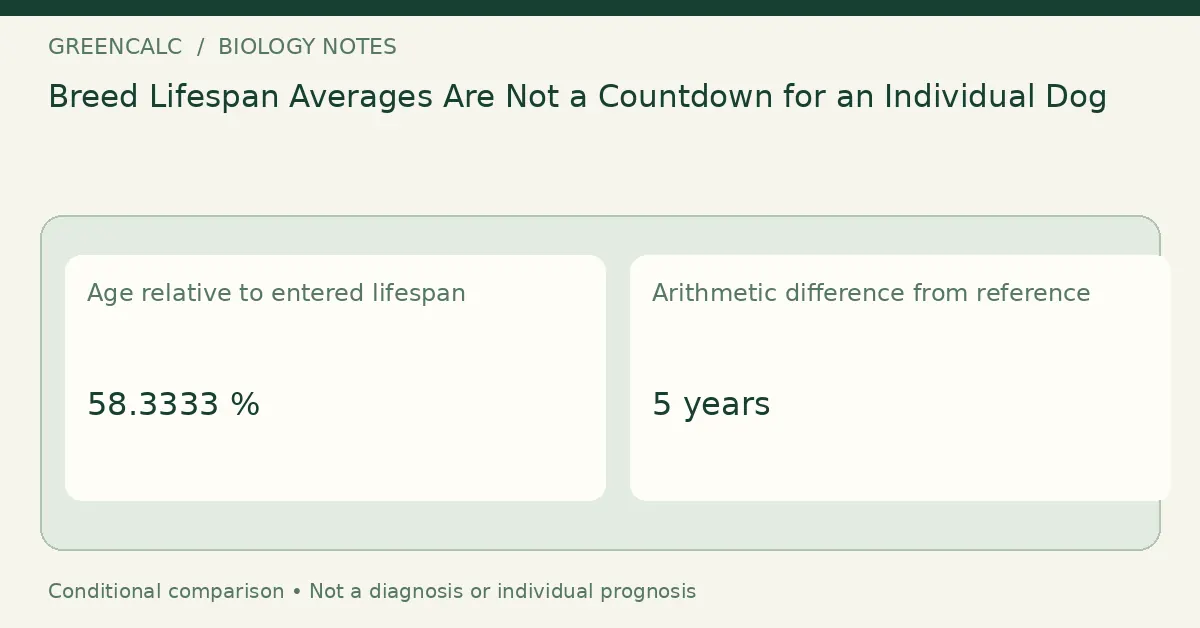
Original instructional diagram for Breed Lifespan Averages Are Not a Countdown for an Individual Dog. Values, when shown, are illustrative; clinical images do not recommend a dose.
Choose a reference for the right population
A lifespan average belongs to the population and study definition from which it was obtained. It cannot automatically describe a dog of a different background or an individual with particular health circumstances. Keep the reference source with your record.
Use Dog Life Expectancy Calculator to work through these inputs while keeping the displayed assumptions in view.
A difference from an average is not remaining life
Subtracting current age from a selected reference produces an arithmetic difference. It does not predict survival or set an endpoint for care. A dog older than the entered average has not exceeded a personal expiration date.
This question belongs to the Dog calculators group within Biology calculators.
Read the calculation on its stated basis
Reference difference = max(0, chosen lifespan reference − current age); relative age = current age ÷ reference.
Enter a justified reference for the relevant cohort. No breed table or individual survival prediction is implied.
Retain the input definitions and units with the result. A later comparison should use the same basis; a change in method is a new scenario, not simply a more precise version of the old number.
Keep related questions separate
Dog Age Calculator addresses a related part of the measurement or interpretation task. Check its own method before carrying a value from one tool to the other.
For a related perspective, read Dog Years to Human Years: Why Conversion Methods Differ.
For tools in other subjects, return to GreenCalc. Keep the calculator result with its assumptions rather than using a link or a matching unit as evidence that two models are interchangeable.
By GreenCalc · Updated 2026-11-05