
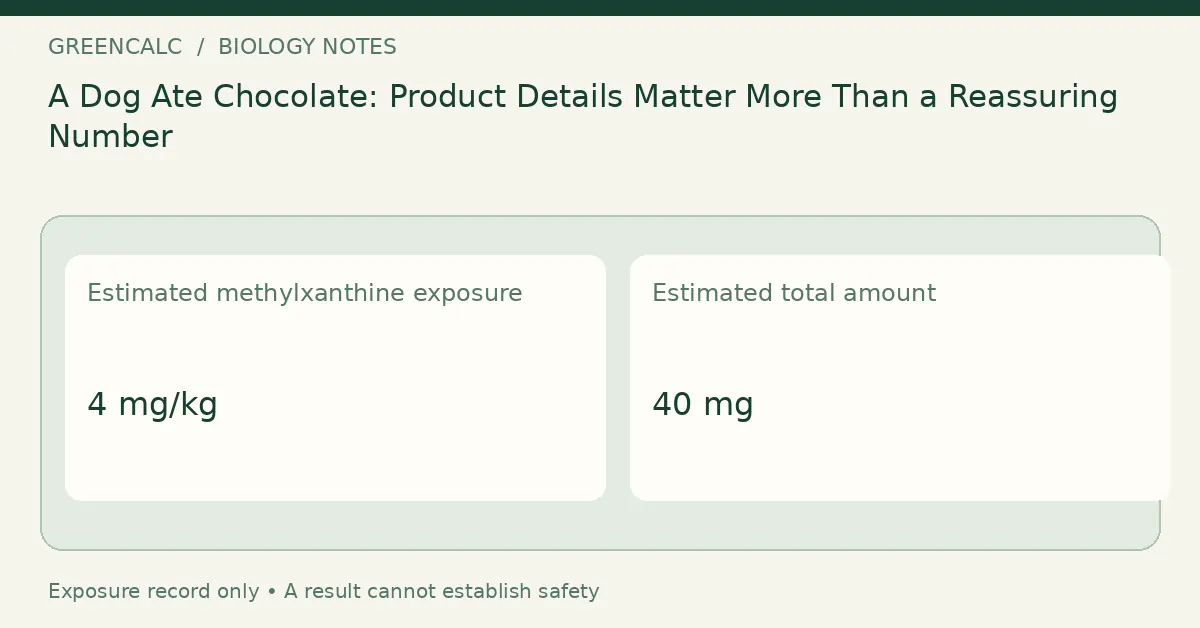
Original instructional diagram for A Dog Ate Chocolate: Product Details Matter More Than a Reassuring Number. Values, when shown, are illustrative; clinical images do not recommend a dose.
Record what was eaten
The type and quantity of product, the animal’s weight and the time of exposure are useful information for a veterinarian. Mixed foods and uncertain portions can make an exposure estimate unreliable. Do not delay seeking advice while trying to make every input exact.
Use Dog Chocolate Toxicity Calculator to work through these inputs while keeping the displayed assumptions in view.
No reassuring category is assigned
The form calculates an exposure only when a defensible methylxanthine concentration is known. It does not classify the animal as safe or decide treatment. Individual risk and the limitations of the estimate need professional assessment.
This question belongs to the Dog calculators group within Biology calculators.
Read the calculation on its stated basis
Estimated exposure (mg/kg) = amount eaten (g) × combined methylxanthines (mg/g) ÷ body weight (kg).
Contact a veterinarian or animal poison service for suspected exposure. No safety classification or treatment instruction is produced.
Retain the input definitions and units with the result. A later comparison should use the same basis; a change in method is a new scenario, not simply a more precise version of the old number.
Keep related questions separate
Dog Quality of Life Calculator addresses a related part of the measurement or interpretation task. Check its own method before carrying a value from one tool to the other.
For a related perspective, read A Dog’s Quality-of-Life Log: Track Domains Instead of Letting a Total Decide.
For tools in other subjects, return to GreenCalc. Keep the calculator result with its assumptions rather than using a link or a matching unit as evidence that two models are interchangeable.
By GreenCalc · Updated 2026-11-05